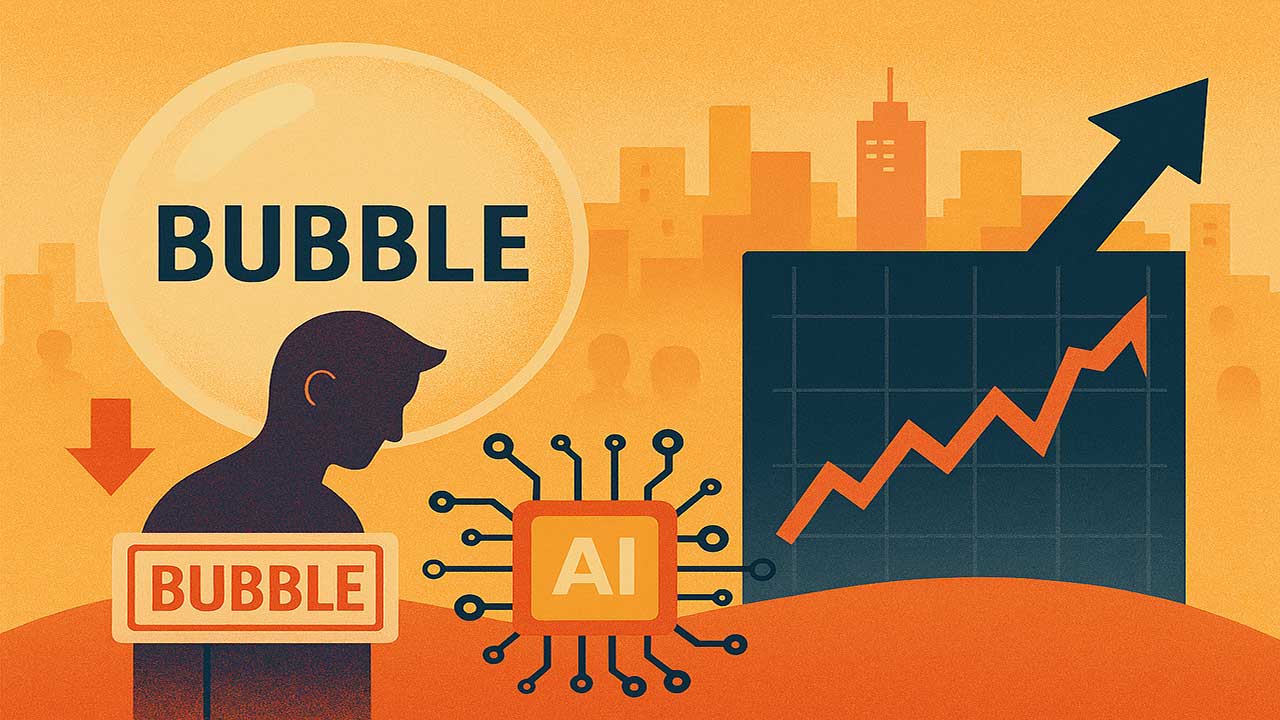
The recent flood of multi-billion-dollar investments in artificial intelligence has sparked debate over whether the industry is following a trajectory similar to the dot-com boom. According to a survey by BofA Global Research, 54% of fund managers believe AI stocks are already in bubble territory, while 38% disagree—highlighting a growing divide in investor sentiment.
Parallels with the dot-com era
At Cisco’s Virtual Media Roundtable, Ben Dawson, President for APJC, compared today’s AI enthusiasm to the early internet era: a cycle of hype, heavy investment, and eventual correction. While some AI ventures may falter, Dawson emphasized that the broader transformation is real and irreversible. Businesses that ignore AI risk falling behind.
Government policy and global dynamics
Public policy is shaping the AI landscape. In the U.S., both the Trump and Biden administrations have framed AI as a strategic priority, echoing past tech eras where government incentives spurred innovation. China is channeling state-led investment into domestic AI firms, while Europe balances regulation with funding initiatives like the €1 billion Apply AI fund.
Investor caution and infrastructure buildout
Despite limited current demand, venture capital and sovereign wealth funds continue to invest heavily in AI infrastructure. Some experts warn this could lead to stranded assets if adoption slows—similar to unused fiber networks after the dot-com bust. Others argue that laying the groundwork now is essential for future scalability.
Simon Miceli of Cisco views the buildout as preparation for industrial-scale AI, not overcapacity. He believes demand will catch up as applications mature, even if a market correction occurs.
Diverging views on valuation and sustainability
At the Milken Institute Asia Summit, GIC’s Bryan Yeo noted inflated valuations among early-stage AI startups. Jeff Bezos echoed the challenge of distinguishing promising ideas from hype, while Goldman Sachs economist Joseph Briggs maintained that current infrastructure spending is economically viable.
ABB’s Morten Wierod and IMF’s Pierre-Olivier Gourinchas downplayed systemic risk, citing supply chain constraints and the non-debt-driven nature of AI investments. OpenAI’s Sam Altman acknowledged speculative excess but predicted long-term winners would emerge.
A cycle, not a collapse
Despite bubble concerns, most experts agree that AI’s long-term impact is profound. As Dawson noted, every major tech shift involves a cycle of excitement, correction, and consolidation. The key challenge now is navigating that cycle wisely—aligning investment with real-world value and preparing for what comes next.