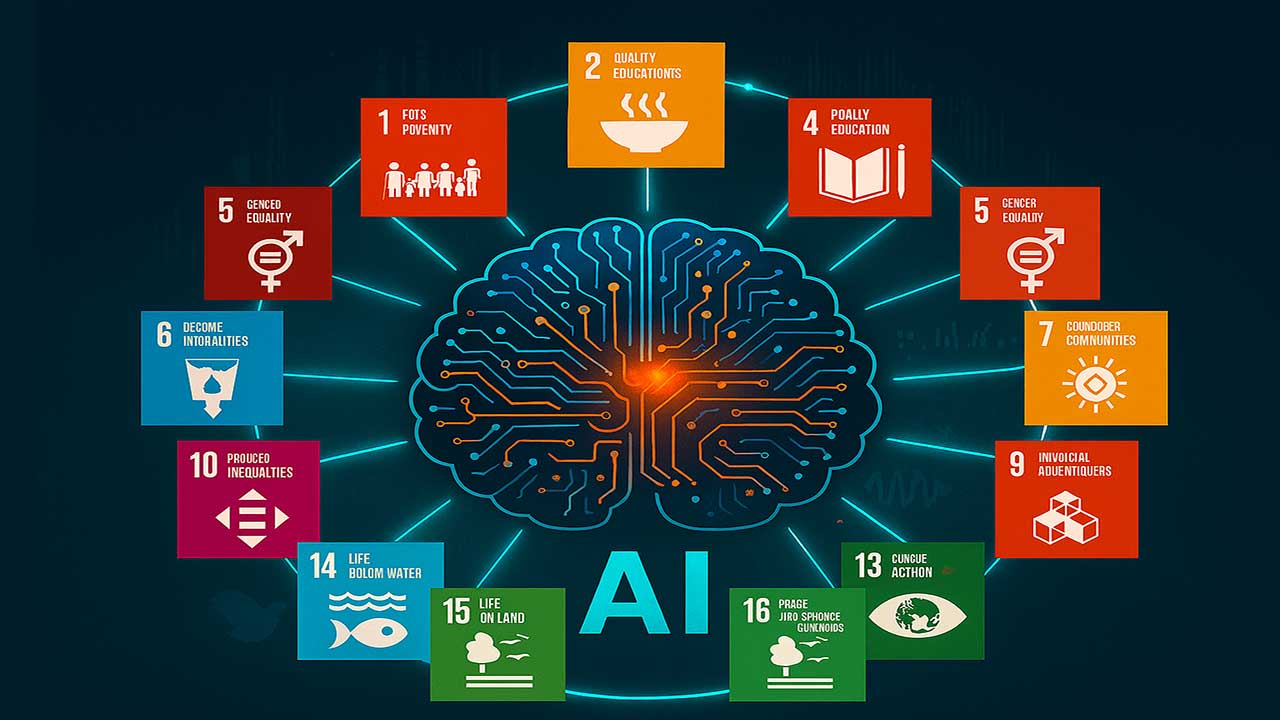
Artificial Intelligence (AI) is increasingly seen as a transformative force in addressing global challenges—but its impact is far from uniformly positive. In this landmark study, Ricardo Vinuesa and colleagues systematically evaluated how AI technologies intersect with the United Nations’ 17 Sustainable Development Goals (SDGs), which aim to eradicate poverty, protect the planet, and ensure prosperity for all by 2030.
Using a structured expert elicitation process, the researchers assessed AI’s influence on all 169 individual SDG targets. Their findings reveal a nuanced landscape: AI can positively enable 134 targets, but may inhibit 59, underscoring the dual-edged nature of technological progress.
Positive Contributions
AI shows strong potential in domains such as:
- Healthcare (SDG 3): AI-powered diagnostics, predictive modeling for disease outbreaks, and personalized treatment plans can improve access and outcomes—especially in underserved regions.
- Education (SDG 4): Adaptive learning platforms and intelligent tutoring systems can tailor instruction to individual needs, helping bridge gaps in literacy and digital access.
- Climate Action (SDG 13): AI models help simulate climate scenarios, optimize energy grids, and monitor deforestation or pollution in real time.
- Infrastructure and Innovation (SDG 9): Smart cities, autonomous transport, and predictive maintenance of public systems are driven by AI-enhanced analytics.
These applications demonstrate how AI can accelerate progress when deployed responsibly and inclusively.
Risks and Inhibitions
However, the study also highlights serious concerns:
- Inequality and Bias (SDG 10): AI systems trained on biased data can reinforce discrimination in hiring, lending, policing, and healthcare.
- Privacy and Surveillance (SDG 16): AI-enabled monitoring tools may erode civil liberties, especially in authoritarian contexts.
- Labor Displacement (SDG 8): Automation threatens jobs in manufacturing, logistics, and even white-collar sectors, potentially widening economic divides.
- Digital Divide (SDG 1 & 4): Unequal access to AI tools and infrastructure can exacerbate existing disparities between countries and communities.
These risks are not hypothetical—they are already manifesting in real-world deployments, from facial recognition controversies to algorithmic bias in criminal justice.
Governance and Ethical Imperatives
The authors emphasize that AI is not inherently good or bad—its impact depends on how it is designed, regulated, and applied. They call for:
- Robust governance frameworks to ensure transparency, accountability, and ethical oversight.
- Inclusive development that prioritizes marginalized voices and avoids techno-solutionism.
- Interdisciplinary collaboration between technologists, policymakers, ethicists, and civil society.
Without these safeguards, AI could undermine the very goals it seeks to advance.
Strategic Implications
This study serves as a wake-up call for governments, corporations, and researchers. It urges stakeholders to move beyond hype and consider the systemic consequences of AI deployment. The SDGs offer a holistic lens through which to evaluate AI’s societal impact—not just in terms of efficiency or profit, but in terms of justice, sustainability, and human dignity.
- Details
- Category: Public Paper Summaries